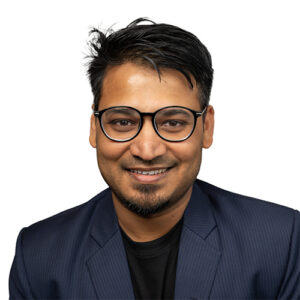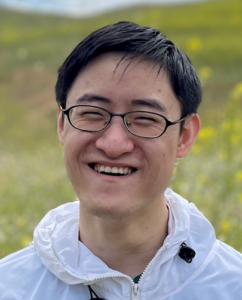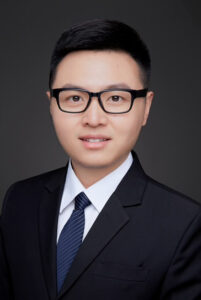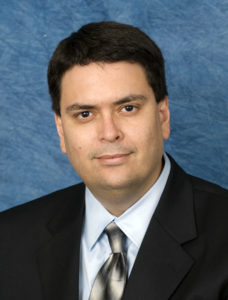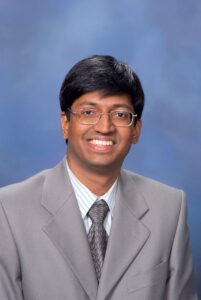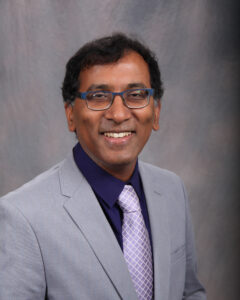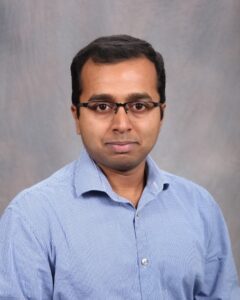
CESG Seminar: Srini Devadas

Friday, February 27, 2026 
10:20 – 11:10 a.m. in ETB 1020

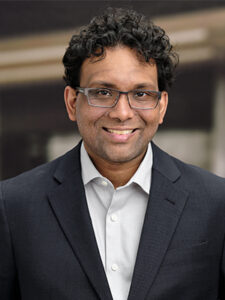
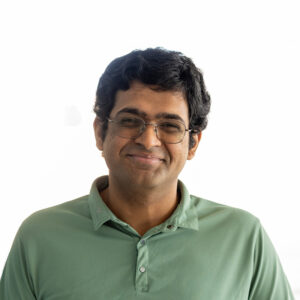
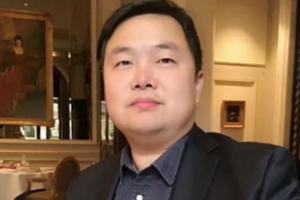
Srini Daevadas
Webster Professor, Electrical and Computer Science
Massachusetts Institute of Technology

Title: “Toward a Universal Cryptographic Accelerator”

Abstract:
There have been few high-impact deployments of hardware implementations of cryptographic primitives. We present the benefits and challenges of hardware acceleration of sophisticated cryptographic primitives and protocols, and we describe work on accelerating fully homomorphic encryption using custom hardware by orders of magnitude over multicore CPUs and GPUs. We argue the significant potential for synergistic codesign of cryptography and hardware, where customized hardware accelerates cryptographic protocols that are designed with hardware acceleration in mind. As a concrete example, we present a new design of a zero-knowledge proof (ZKP) accelerator that leverages hardware-algorithm co-design to generate proofs orders of magnitude faster than commodity parallel hardware. In order to mitigate the high cost of designing custom hardware, we propose the design of a universal cryptographic accelerator that can accelerate post-quantum as well as number-theoretic cryptography.

Biography:
Srini Devadas is the Webster Professor of EECS at the Massachusetts Institute of Technology, where he has been on the faculty since 1988. Devadas has worked in the fields of Computer-Aided Design, computer architecture, computer security, and applied cryptography. His work in these fields has resulted in eight “test-of-time” awards, given to papers at least ten years after publication, and resulted in deployments in commercial secure hardware circuits and processors, and popular messaging applications. Devadas is a MacVicar Faculty Fellow and an Everett Moore Baker teaching award recipient, considered MIT’s two highest undergraduate teaching honors.


LinkedIn: https://people.csail.mit.edu/devadas

CESG Seminar: Nathan Albaugh


Friday, February 13, 2026 
10:20 – 11:10 a.m. in ETB 1020

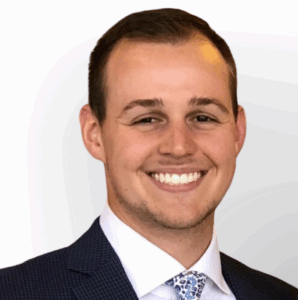
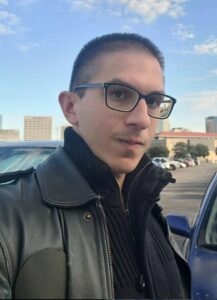
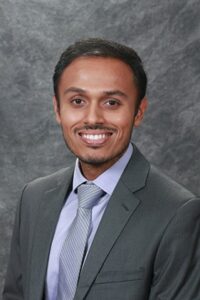
Nathan Albaugh
ARM – Senior Principal Engineer

Title: “Microprocessor Development Specialties – Technical Roles, Workflows, and Career Paths

Abstract:
Microprocessor development is a team sport and are built by thousands of engineers.  No single person designs a processor.  Each specialty optimizes different axis like performance, power, area, correctness, manufacturability, time to market.  This seminar will give a brief overview of different specialties, with a deeper dive into IP verification.

Biography:
My name is Nathan Albaugh.  I grew up in Round Rock, Texas.  I have an older brother (Aggie class of ’96) and visiting him for bonfire and a couple Aggie football games I was hooked and enthusiastically started my career journey as a computer engineering major class of ’99!  At the time, this was a relatively new major!

I co-oped with Motorola and IBM eventually joining IBM full-time after graduating. I spent 13 years at IBM in different roles but settled into microprocessor verification as an area of expertise and then small team leadership. After, I joined Qualcomm and worked for 4 years on an exciting project of developing ARM based servers.  This eventually led me to ARM where I have spent the last 9 years working in the systems IP team and becoming verification lead of CMN (coherent mesh network) interconnect IP.

I have a wife and 3 kids (a Junior at A&M, a high school senior attending A&M in the fall, and a high school freshman).  In my free time I enjoy fishing at the Texas coast and recently have picked up a golfing addiction!

LinkedIn: https://www.linkedin.com/in/nathan-albaugh-a3040723/


CESG Seminar: Yanmin Gong


Friday, February 20, 2026 
10:20 – 11:10 a.m. in ETB 1020

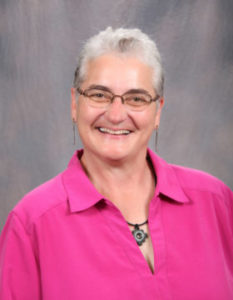
Dr. Yanmin Gong
Associate Professor | School of Engineering Medicine
Texas A&M University, Houston

Title: “Advancing Healthcare with Trustworthy and Accessible Artificial Intelligence”

Abstract:
Artificial intelligence (AI) holds great promise for advancing digital health through personalized and data-driven care. Yet, its real-world clinical impact remains limited by challenges such as data fragmentation and privacy, efficiency, and model generalization. In this talk, I will present my research on developing accessible and trustworthy AI systems for smart healthcare. I will highlight several of our recent works that address these core challenges, achieving improved system and data efficiency, trustworthiness, and high model utility in practice.

Biography:
Dr. Yanmin Gong is an associate professor in the School of Engineering Medicine at Texas A&M University, Houston. Her research interests lie at the intersection of machine learning, edge computing, and trustworthy AI, with application to health. She received her M.S. degree in Electrical Engineering from Tsinghua University, China, in 2012 and her Ph.D. degree in Electrical and Computer Engineering from the University of Florida in 2016.

She is a recipient of the NSF CAREER Award, CISCO Faculty Research Award, IEEE Computer Society TCSC Early Career Researchers Award for Excellence in Scalable Computing, and Rising Star in Networking and Communications Award by IEEE ComSoc N2Women. She is currently an Editor of the ACM Computing Surveys, IEEE Transactions on Dependable and Secure Computing, and IEEE Wireless Communications. Her research has been supported by NSF, NIH AIM-AHEAD, CISCO, Air Force Research Lab and Army Research Office.

Homepage is here: https://yanmingong.github.io/

CESG Seminar: Ayobami Edun


Friday, February 6, 2026 
10:20 – 11:10 a.m. in ETB 1020

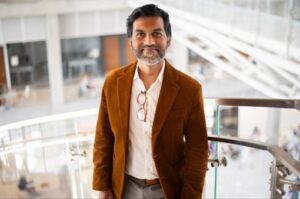
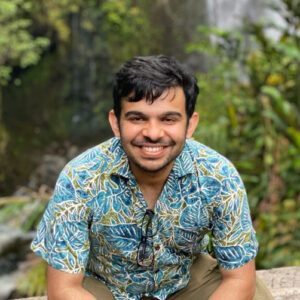
Dr. Ayobami S. Edun
Senior Assistant Vice President

Title: “AI in Highly Regulated Environments: From Data Integrity to Explainability, Benchmarking, and Model‑Risk Management”

Abstract:
AI systems in highly regulated environments must deliver reliability, transparency, and operational safety under demanding real‑world conditions. Particularly, AI models for fraud detection face extreme class imbalance, delayed ground‑truth labels, adversarial behavior, and continuous data drift—making rigorous validation both technically challenging and operationally essential. This seminar presents a reproducible, regulator‑aligned framework for assessing high‑risk AI/ML models, emphasizing data integrity checks, drift diagnostics, and performance stability testing. I will show how surrogate and offset models reconstruct global model behavior when vendor transparency is limited, how segment‑level diagnostics expose under‑performance, and how sensitivity and robustness analyses stress‑test stability under realistic perturbations. The talk concludes with practical strategies for automated validation pipelines, alert‑rate governance, and compensating controls that preserve model reliability while supporting frontline operations. The overarching goal is to illustrate how disciplined validation and model‑risk management enable trustworthy, compliant AI in tightly governed domains.

Biography:
Ayobami S. Edun, Ph.D., is a Senior Assistant Vice President focused on validating AI and machine‑learning systems used for fraud detection in highly regulated financial environments. His work spans statistical testing, model explainability, adversarial robustness, and regulatory compliance, with emphasis on developing reproducible and audit‑ready validation pipelines. He regularly leads the validation of high‑risk vendor and in‑house models, including neural‑network‑based real‑time fraud detectors and dynamic, frequently retrained systems whose opacity and operational constraints require surrogate modeling and automated testing frameworks.

Dr. Edun holds a Ph.D. in Computer Engineering and works extensively with Python, Spark, and secure MLOps tooling to enable robust, large‑scale evaluation of model behavior. His research interests include explainable AI, stress testing of ML systems, benchmarking under distribution shift, and the intersection of AI governance with statistical methodology.

CESG Seminar: Lijun Qian

Friday, January 30, 2026 
10:20 – 11:10 a.m. in ETB 1020

Dr. Lijun Qian
Texas A&M Regents Professor
Electrical and Computer Engineering
Prairie View A&M University

Title: “Task-Aware Design Optimizations for Analog In-Memory Inference Across Vision and Language”

Abstract:
Analog in-memory computing (AIMC) is a promising compute paradigm to improve speed and power efficiency of neural network inference beyond the limits of conventional von Neumann-based architectures. However, AIMC introduces fundamental challenges such as noisy computations and there lacks a comprehensive understanding of how analog inference generalizes across task domains, precision settings, and architectural scales, and how core design parameters such as cell bits, ADC resolution, and tile size jointly influence model reliability and efficiency. In this talk, we start with benchmarking inference performance of pretrained deep learning models on AIMC simulators. We conduct a comprehensive evaluation of analog inference across both vision and language tasks using three state-of-the-art simulators—CrossSim, AIHWKIT, and MemTorch. Then we systematically quantify how cell precision, ADC resolution, and crossbar tile size influence model accuracy, stability, and efficiency under realistic non-idealities. Results demonstrate that analog inference can achieve within 2–5% of digital baselines when parameters are tuned regarding to layer sensitivity and workload structure. Furthermore, we derive task-aware design guidelines recommendations for vision models and transformer-based NLP tasks based on our findings.

Biography:
Dr. Lijun Qian is a Texas A&M University System Regents Professor and an AT&T Endowed Professor in the Department of Electrical and Computer Engineering at Prairie View A&M University (PVAMU). He is also the Director of the Center of Excellence in Research and Education for Big Military Data Intelligence (CREDIT Center). He received his BE from Tsinghua University, MS from Technion-Israel Institute of Technology, and PhD from Rutgers University. Before joining PVAMU, he was with Bell-Labs Research in Murray Hill, New Jersey. He was a visiting professor at Aalto University, Finland. He led the CREDIT Center to win the first place in the AI tracks at Sea challenge organized by the US Navy, and the first place in the IEEE CyberC Big Data Competition organized by the IEEE Big Data Initiative. He received Best Paper Award in IEEE CAMAD 2025, AIxHEART 2025, IEEE RoboCom 2023, and IEEE Globecom 2017. His research interests are in the areas of big data processing, artificial intelligence, quantum information science and quantum machine learning, wireless communications and mobile networks, network security and intrusion detection, and computational and systems biology.

Blog: https://www.pvamu.edu/blog/lijunqian/

CESG Seminar: Pablo Rangel

Friday, January 23, 2026
10:20 – 11:10 a.m. in ETB 1020

Dr. Pablo Rangel
Assistant Professor
Electrical Engineering
Texas A&M University–Corpus Christi

Title: “Exploration of Event-Based Vision Sensors for Autonomous Systems Applications”

Abstract:
At the Collaborative Robots and Agents Lab (CORAL) at TAMUC-CC we are currently exploring multiple applications of event-based camera sensors. We started by exploring the integration of dynamic vision sensors (DVS), and Real-Time Object Detection (RTOD) algorithms. DVS or neuromorphic cameras provide a solution by capturing motion as discrete “events” rather than full-frame images, offering high temporal resolution, low latency, and reduced data bandwidth. Produces visualization data with minimized complexity and throughput. Then, RTOD can be achieved with optimal resource usage accurately and at high speeds. An architecture or sensor fusion framework has been in development to integrate and make the most optimal use of combining diverse vision-based technologies. The framework was preliminary studied for the capabilities of event-based imagers combined with YOLO. Initial experimental work and observations were documented in the utilization of the V2E toolbox that generates realistic synthetic DVS events from intensity frames. The YOLOv12 algorithm is implemented in both the frame and its following raw synthetic DVS event images. At CORAL we currently obtained Prophesee PSK320MPCM2RPI5 GENX320MP-CM2 event-camera module with fixed M6 mount lens (FOV 104°)  and  GENX320MP-CCAM5 chip on board with interchangeable M12 mount lens (FOV 76°) for hands-on experiments to validate and further expand on experiments done with synthetic data. By observing these technologies, confounders and limitations is possible to plan into developing filtering and other documented solutions to fusion these computer vision tools. This research effort aims to develop advanced methods for real-time monitoring in fast changing environments such as autonomous systems-based reconnaissance, structural integrity inspections, law enforcement monitoring, collision avoidance, autonomy T&E and overall tracking, detection, and characterization of objects of interest.

Biography:
Pablo Rangel, Ph.D., is an Assistant Professor of Electrical Engineering at Texas A&M University–Corpus Christi, where he leads the Collaborative Robotic Agents Laboratory (CORAL). He earned his Ph.D. in Electrical and Computer Engineering from The University of Texas at El Paso in May 2017. Dr. Rangel’s teaching portfolio spans undergraduate and graduate courses in electrical and computer engineering, including Circuit Analysis, Electronic Systems Design, Communication Theory and Systems, Microprocessors and Microcontrollers, Electromagnetic Theory, and Dynamics and Control Systems. He has also developed and instructed laboratories in microcontroller design and circuit analysis, integrating experiential learning components to enhance student engagement and technical proficiency. His research focuses on test and evaluation of autonomous systems, unmanned aircraft systems, multi-agent robotics, sensor fusion, Internet of Things (IoT), artificial intelligence, and cyber-physical systems. His applied research extends to mechatronics, biomedical instrumentation, wireless communications, systems engineering, and cybersecurity. Dr. Rangel has collaborated on research sponsored by the U.S. Department of Defense and the National Science Foundation, serving as Co-Principal Investigator for NSF Award #2131263 and DoD Grant #W911NF-23-1-0186. He has also contributed to projects addressing spectrum management and radio telemetry analysis for the U.S. Army.

Homepage: https://www.tamucc.edu/files/php/views/faculty-details.php?profile=Pablo_Rangel

CESG Seminar: Yong Oh Lee

Friday, January 16, 2026
10:20 – 11:10 a.m. in ETB 1020

Dr. Yong Oh Lee
Assistant Professor
Industrial & Data Engineering
Hongik University, South Korea

Title: “Designing AI Pipelines for Multimodality in Data-Scarce Medical Systems”

Abstract:
Fully multimodal AI systems are often studied under the assumption of large, well-aligned datasets across modalities, an assumption that rarely holds in real medical environments. Many medical AI applications instead operate in regimes where data are limited, noisy, imbalanced, and only weakly aligned across sources. This talk examines data-scarce medical systems as concrete examples of this regime and focuses on the engineering considerations required to build robust AI pipelines under such constraints. Specifically, the talk begins with task-level model design and development, and then it examines a structural design direction that connects single-modality learning to multimodal expansion by leveraging segmentation outputs as intermediate representations and applying attention-based multi-view integration. These design choices show how system-level decisions shape model behavior and support gradual extension toward multimodality.

Biography:
Dr. Yong Oh Lee is an Assistant Professor in Industrial & Data Engineering at Hongik University, South Korea. He received his Ph.D. in Computer Engineering in 2012 from Texas A&M University. Before joining academia, he worked at Samsung Electronics in Korea and at the Korea Institute of Science and Technology Europe (KIST Europe) in Germany. His research focuses on artificial intelligence applications in healthcare, including multimodal medical imaging, clinical data integration, and large language models for medical information and drug safety. He has led projects on rare disease diagnosis, ophthalmology, orthopedics, oral cancer, and AI-enhanced educational systems. Dr. Lee actively collaborates with medical researchers to develop explainable and clinically reliable AI models that bridge engineering and medicine, aiming to advance data-driven healthcare innovation and support translational applications in clinical practice.

Homepage: https://sites.google.com/view/aiahongikuniversity/home

Aggie Graduate 2012! (Advisor: Dr. Reddy)

Special Seminar: Matt Streyle

Hosted by Dr. Jiang Hu

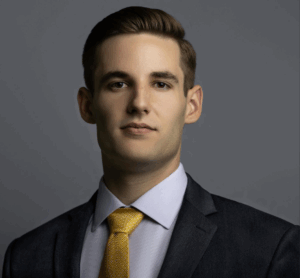
Matt Streyle
Senior Director at Samsung
Austin Research Center (SARC)

Thursday, November 20, 2025
1:30 p.m. – 2:20 p.m.
WEB 236C

Seminar: “Design-Technology Co-Optimization (DTCO) – Blending Design, Foundry and EDA for Optimal Design”

Abstract:
With Moore’s law winding down and the continued demand for product optimization, Design-Technology Co-Optimization (DTCO) is becoming THE critical element in advancing Power, Performance and Area (PPA) for each product life cycle. This talk will share real world example of DTCO for Samsung Foundry and System LSI, driving Exynos SOC product competitiveness by exploring design, foundry and EDA collaborations.

Biography:
Matt Streyle is Sr Director at Samsung Austin Research Center (SARC) leading teams responsible for product development of GPU and SystemIP for Exynos SOCs. His teams include CAD, DTCO, Physical Design and Implementation and Si Learning. Matt has previously worked at AMD, Intel and Qualcomm with a focus on xPU development, PPA Benchmarking and DTCO. He has a Masters in ECE from Johns Hopkins University and a Bachelors in ECE from Carnegie Mellon University.

CESG Seminar: Kyung Min Kim

In conjunction with the ECE Leaders & Innovators:

Friday, Dec. 5, 2025
10:20 – 11:10 a.m. in ETB 1020

Tenured Associate Professor
Department of Materials Science and Engineering
Korea Advanced Institute of Science and Technology (KAIST)

Title: “Spatiotemporal Computing Utilizing Dual Thermal Dynamics of Mott Memristors”

Abstract:
The Mott memristor is a highly intriguing device that demonstrates unique electrical characteristics through the dynamic interaction of heat and current. The device exhibits dynamic thermal behavior, encompassing temporal accumulation via heat capacity and spatial transportation through heat diffusion. This spatiotemporal thermal activity enables coupling between memristor devices when arranged in arrays, which can be effectively utilized for computing. Additionally, the thermal dynamics of Mott memristors inherently involve stochasticity, resulting in probabilistic behavior. These properties, such as thermal coupling and stochasticity, provide a novel approach to tackling NP-hard problems, which are often challenging for conventional computers to solve. This presentation explores various computing devices that leverage the spatiotemporal thermal information of Mott memristors, including true random number generators (TRNGs), probabilistic computing systems, and thermal computing devices. The future potential and implications of these technologies will also be discussed.

Biography:
Professor Kyung Min Kim is a Tenured Associate Professor in the Department of Materials Science and Engineering at the Korea Advanced Institute of Science and Technology (KAIST) since 2017. He earned his B.S. degree in 2003 and his Ph.D. degree in 2008 from Seoul National University, Seoul, Korea. From 2011 to 2013, he worked at Samsung Electronics in Korea, and from 2014 to 2017, he worked at Hewlett Packard Labs of Hewlett Packard Enterprise in Palo Alto, California, USA. His research covers a wide range of areas related to next-generation semiconductor technology. This includes exploring new semiconductor materials and processing techniques, post-von Neumann computing technologies such as neuromorphic computing, reservoir computing, and probabilistic computing, as well as semiconductor packaging technology.

ECE Fall Poster Event 2025

⭐ RESULTS ⭐

The judges felt there was a lot of great work presented. Thank you to everyone who came out to support our students!

Poster Event Winners
1st place – Sungjun Yoon – Dr. Jose Silva-Martinez
2nd place –  Ibrahim Shahbaz – Dr. Eman Hammad
2nd place – Luke Lowery – Dr. Adam Birchfield
4th place – Wenyuan Zhao – Dr. Chao Tian
CEEN✨5th place – Vishnu Teja Kunde & Mahdi Farahbakhsh – Drs. Krishna Narayanan & Dileep Kalathil👑
6th place – Inhyun Kim – Dr. Samuel Palermo
CEEN✨7th place – Nida Zamir – Dr. I-Hong Hou 👑 


Oct. 31, 2025

Come support 🙌 your friends, classmates, and students who are representing CESG and presenting 🗣 at the ECE 2025-2026 Poster Event!! CESG will have 21 posters and 23 presenters!

To view their poster titles and those of other ECE students, you can go to the 🗓 ECE calendar at: https://calendar.tamu.edu/ecen/event/366310-ece-fall-graduate-poster-event.

Not on the list but also participating are:
**Josh Mashburn (advisor: Dr. Gratz)
**Fatemeh Doudi (advisor: Dr. Kalathil)
**Sabyasachi Gupta (advisor: Dr. Lusher)

Good luck to all with your presentations, the competition, and with talking with some 🏢 industry folks expected to be there!