• Skip to main content
  • Skip to primary sidebar

Department of Electrical and Computer Engineering

The Computer Engineering and Systems Group

Texas A&M University College of Engineering
  • Research
  • News
  • People
    • Faculty
    • Joint Faulty
    • Staff
    • Students
  • Academics
    • Graduate Degrees
      • All Courses
    • Undergraduate
  • Seminars
    • CESG Seminars
    • Fishbowl Seminar Series
    • Computer Engineering Eminent Scholar Seminar Series
    • Topics In Systems Seminar
    • Related Seminars
  • Contact

Seminars

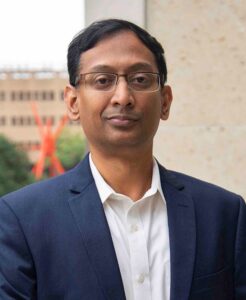
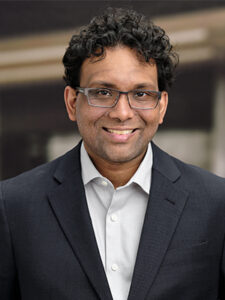
CESG Seminar: Varun Murali

Posted on September 5, 2025 by Keshari Rijal

Friday, Sept. 19 2025
10:20 – 11:10 a.m. in ETB 1020

Varun Murali
Assistant Professor, Electrical & Computer Engineering
Texas A&M University

Title: “From Robots that React to Robots that Adapt”

Abstract:
Achieving truly autonomous robotic systems that can adapt to unknown environments and collaborate using natural language requires a fundamental shift beyond the traditional “sense-think-act” paradigm. In this talk, I will advocate for a holistic framework centered on active perception, where perception, reasoning, and action are tightly integrated into a unified loop. This approach is key to developing resilient, adaptive robots capable of operating in novel and unstructured settings. We will explore the interplay between perceptual geometry, semantics, and action within this paradigm. The first part of the talk explores perception-aware planning and the necessity for coupling the problem for perceptual degradation. The latter half focuses on how foundation models for embodied AI can enable scalability and generalization. A crucial aspect of this discussion is the challenge of translating natural language into actionable information — determining what to map, which areas to explore, and how to represent knowledge in a way that remains scalable while retaining task relevance. Additionally, I will discuss hierarchical architectures that support effective decision-making across diverse contexts and how to build guardrails on inferred actions from foundation models to ensure responsible and safe autonomy. By addressing these challenges, we move toward adaptive, resilient, and responsible robotic systems that can function collaboratively with humans and other robots at scale. This vision lays the groundwork

Biography:
His research develops computationally efficient algorithms for hierarchical semantic mapping, planning, and tasking, enabling robots to operate in dynamic and unstructured environments. Prior to joining Texas A&M, he was a Postdoctoral Researcher at the GRASP Laboratory, University of Pennsylvania, with Prof. Vijay Kumar, and earned his Ph.D. in Aeronautics and Astronautics from MIT under Prof. Sertac Karaman. His work emphasizes general-purpose autonomy frameworks that tightly integrate perception and action to improve decision-making and adaptability. He has contributed methods for semantic reasoning, robust localization and mapping, and perception-aware planning in challenging settings. Currently, he is exploring how foundation models and large language models can advance task representations, safe autonomy, and size, weight, and power-constrained robotic systems.

Varun Murali’s Homepage: https://varunmurali1.github.io
Filed Under: Seminars

CESG Seminar: Stephen McCullough

Posted on September 5, 2025 by Keshari Rijal

Friday, Sept. 12 2025
10:20 – 11:10 a.m. in ETB 1020

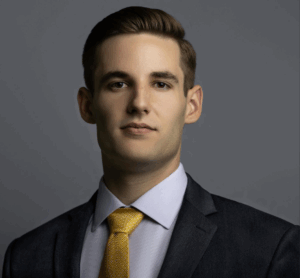
Stephen McCullough
Alumnus from Texas A&M Engineering
Dept. of Electrical Engineering

Title: “Solution Engineering, Explained”

Abstract:
This seminar will illuminate the world of solutions engineering and why it may be the right path for you. You’ll learn about careers in solutions engineering, how the role differs from conventional engineering positions, and the skills that set successful solutions engineers apart.

Audience:
Engineering students of all years and disciplines welcomed!

Biography:
Stephen McCullough graduated from Texas A&M with a B.S. in Electrical Engineering, and he has since built his career as a solutions engineer. He has worked at Dell Technologies, Amazon, and now NVIDIA, where he designs and implements large-scale AI infrastructure deployments for cloud providers. Stephen has gained valuable insights from these experiences, and he is eager to share his knowledge with Aggie engineering students.

Stephan McCullough’s Homepage: https://www.linkedin.com/in/stephen-mcc

Filed Under: Seminars

CESG Seminar: Fabia Farlin Athena

Posted on August 26, 2025 by Vickie Winston

Friday, Sept. 5 2025
10:20 – 11:10 a.m. in ETB 1020

Fabia Farlin Athena
Energy Postdoctoral Fellow in Electrical Engineering
Stanford University

Title: “Emerging Materials and Devices for Energy-Efficient Nanoelectronics”

Abstract:
The rapid rise of data-intensive workloads, driven by artificial intelligence, is exposing the fundamental energy and latency limits of conventional computing hardware. The memory wall bottleneck, in particular, demands a shift toward new hardware architectures designed to minimize costly data movement. In this seminar, I will present advances at the intersection of materials science and device engineering that address this challenge. First, I will discuss adaptive oxide-based resistive memories for in-memory computing, detailing how novel MAX-phase electrodes achieve record-low off-state currents and how an in-situ recovery method enables robust transfer learning on analog AI accelerators. Next, I will introduce complementary back-end-of-line technologies that advance scalability for high-density, on-chip memory, including oxide semiconductor gain-cells and an interface-dipole engineering strategy for precise threshold voltage tuning. Together, these results highlight a practical and scalable path toward vertically integrated, energy-efficient electronics for future data-centric applications.

Biography
Dr. Fabia Farlin Athena is an Energy Postdoctoral Fellow in Electrical Engineering at Stanford University, working with Prof. H.-S. Philip Wong and Prof. Alberto Salleo to develop high-bandwidth oxide-semiconductor gain-cell memories and monolithic 3-D memory/logic stacks for ultra-low-power AI systems. She earned her Ph.D. and M.S. in Electrical & Computer Engineering from Georgia Institute of Technology, advised by Prof. Eric M. Vogel, where her research focused on adaptive oxide memristors for brain-inspired AI, receiving the Sigma Xi Best Ph.D. Thesis Award. She has also held research scientist intern positions at IBM TJ Watson. Fabia’s interdisciplinary contributions have been recognized with the IBM PhD Fellowship, MRS Graduate Student Award, Cadence Technology Scholarship, VLSI Symposium Highlight Paper, EECS Rising Stars, Stanford Energy Postdoctoral Fellowship, and Forbes 30 Under 30 North America.

Dr. Athena’s Homepage: https://ffathena.github.io/

Filed Under: Seminars

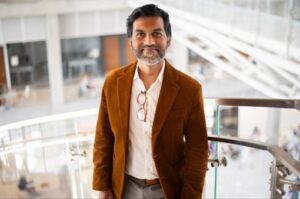
CESG Fishbowl Seminar: Sanjay Shakkottai

Posted on July 2, 2025 by Vickie Winston

Tuesday, July 15, 2025
3:30 – 4:30 p.m. in WEB 333’s Fishbowl

Sanjay Shakkottai
Professor of ECE and Director of Center for Generative AI
University of Texas, Austin

Title: “Training-Free Approaches for Image Inversion and Editing Using Latent Generative Models”

Abstract:
Diffusion-based generative models transform random noise into images; their inversion aims to transform images back to structured noise that is suitable for recovery and editing. In this talk, we present Reference-Based Modulation (RB-Modulation), a plug-and-play solution for training-free editing and stylization of diffusion models. Existing training-free approaches exhibit difficulties in (a) style extraction from reference images in the absence of additional style or content text descriptions, (b) unwanted content leakage from reference style images, and (c) effective composition of style and content. RB-Modulation is built on a novel stochastic optimal controller where a style descriptor encodes the desired attributes through a terminal cost. The resulting drift not only overcomes the difficulties above, but it also ensures high fidelity to the reference style and adheres to the given text prompt. We also introduce a cross-attention-based feature aggregation scheme that allows RB-Modulation to decouple content and style from the reference image. Next, we study inversion and image editing using Rectified Flow (RF) models (such as Flux, the current state-of-art model for image generation). We present RF-Inversion using dynamic optimal control derived via a linear quadratic regulator. We show that the resulting vector field is equivalent to a rectified stochastic differential equation. Additionally, we extend our framework to design a stochastic sampler for Flux. Our inversion method allows for state-of-art performance in zero-shot inversion and editing, outperforming prior works in stroke-to-image synthesis and semantic image editing, with large-scale human evaluations confirming user preference.

Projects: (ICLR 2025 — https://rb-modulation.github.io/ ), (ICLR 2025 — https://rf-inversion.github.io/ ), (CVPR 2024 — https://stsl-inverse-edit.github.io/ ), (Tutorial on diffusion models: https://www.youtube.com/watch?v=NJ72iEPRXFk )

Biography
Sanjay Shakkottai received his Ph.D. from the ECE Department at the University of Illinois at Urbana-Champaign in 2002. He is with The University of Texas at Austin, where he is a Professor in the Chandra Family Department of Electrical and Computer Engineering, and holds the Cockrell Family Chair in Engineering #15. He is also the Director of the Center for Generative AI, which hosts a campus-wide GPU cluster at UT Austin. He received the NSF CAREER award in 2004 and was elected as an IEEE Fellow in 2014. He was a co-recipient of the IEEE Communications Society William R. Bennett Prize in 2021. Dr. Shakkottai has served as the Editor in Chief of IEEE/ACM Transactions on Networking. His research interests lie at the intersection of statistical learning and algorithms for resource allocation, with applications to generative models and wireless communication networks.

Filed Under: Seminars

CESG Seminar: Tomer Galanti

Posted on April 17, 2025 by Keshari Rijal

Friday, April 25, 2025
10:20 – 11:10 a.m. (CST) ETB 1020

Tomer Galanti
Assistant Professor, Computer Science & Engineering
Texas A&M University

Title: “SGD and Weight Decay Secretly Compress Your Neural Network”

Abstract:
Several empirical results have shown that replacing weight matrices with low-rank approximations results in only a small drop in accuracy, suggesting that the weight matrices at convergence may be close to low-rank. In this talk, we will explore the origins of the bias in Stochastic Gradient Descent (SGD) that leads to learning low-rank weight matrices when training neural networks. Our findings demonstrate that training neural networks with SGD and weight decay introduces a bias toward rank minimization in the weight matrices. We theoretically and empirically show that the rank of the weight matrices is controlled by the batch sizes, learning rate, and the amount of regularization. Unlike prior work, our analysis does not rely on assumptions about the data, convergence, or optimality of the weight matrices and applies to a broad range of neural network architectures, regardless of width or depth. Finally, we will discuss the connections between our analysis and other related properties, such as implicit regularization, generalization, and compression. This is joint work with Zachary Siegel, Aparna Gupte, and Tomaso Poggio.

Biography
Tomer Galanti is an Assistant Professor in the Department of Computer Science and Engineering at Texas A&M University. His research focuses on the theoretical and algorithmic foundations of deep learning and large language models. Combining theory and experimentation, his work addresses core challenges in deep learning efficiency — including reducing data requirements, designing compressible networks, enabling rapid adaptation to new tasks, accelerating inference, and improving training stability.

Prior to joining Texas A&M, he was a postdoctoral associate at MIT’s Center for Brains, Minds & Machines, where he worked with Tomaso Poggio. He received his Ph.D. in Computer Science from Tel Aviv University, advised by Lior Wolf. In 2021, he also interned as a Research Scientist at Google DeepMind, collaborating with Andras Gyorgy and Marcus Hutter.

Filed Under: Seminars

CESG Seminar: Kaushik Chowdhury 

Posted on March 31, 2025 by Vickie Winston

Friday, April 11, 2025
10:20 – 11:10 a.m.  (CST)
ETB 1020

Dr. Kaushik Chowdhury 
Chandra Family Endowed Distinguished Professor
Dept. of Electrical Engineering & Computer Engineering
The University of Texas, Austin

Title: “Programming the Network and the Environment for Sensing, Communication and Computation”

Abstract:
This presentation delves into how extreme reconfigurability will shape future wireless networks, made possible by exciting new developments in the areas of open radio access networks (O-RAN) and reconfigurable intelligent surfaces (RIS). By embracing programmability at all levels, from centralized cellular architectures to distributed network components, such wireless networks will not only establish resilient communication links but also perform sensing tasks to better perceive and, to an extent, even engineer the surrounding environment. In this two-part talk, we first describe how “programmable networks” in the form of O-RAN-compliant base stations can evolve their roles from sensing weak radar signals to performing automated network traffic analysis followed by resource allocation. In the second part of the talk, we shift towards “programmable environments” where we experimentally demonstrate how custom-designed RIS can be used for channel hardening in single antenna receivers by intentionally creating multipath diversity. We also explore how such programmability opens a new domain of wireless computing, where transmitted signals can be used to perform mathematical operations by leveraging the physics of over-the-air propagation. A common theme in programming both the “network” and “environment” is rigorous experimental validation on laboratory and field-deployed systems.

Biography
Kaushik Chowdhury is a Chandra Family Endowed Distinguished Professor in the Department of Electrical & Computer Engineering at The University of Texas at Austin. His primary interest lies in the areas of applied machine learning for wireless, including signals intelligence, spectrum monitoring and sharing in commercial and dual-use environments, dataset generation, and network optimization by harnessing big data. Prof. Chowdhury has worked on several large-scale wireless community infrastructure projects that include the Colosseum RF/network emulator as well as the Platforms for Advanced Wireless Research project office. Prof. Chowdhury was a finalist for the 2023 US Blavatnik National Awards for Young Scientists. He was also the winner of the U.S. Presidential Early Career Award for Scientists and Engineers (PECASE) in 2017, the Defense Advanced Research Projects Agency Young Faculty Award in 2017, the Office of Naval Research Director of Research Early Career Award in 2016, and the National Science Foundation (NSF) CAREER award in 2015. He is an IEEE Fellow and ACM Distinguished Member.

Filed Under: Seminars

CESG Seminar: Vijay K. Shah

Posted on March 20, 2025 by Keshari Rijal

Friday, March 25, 2025
10:20 – 11:10 a.m.  (CST)
ETB 1020

Dr. Vijay K. Shah, PhD
Assistant Professor
Dept. of Electrical Engineering and Computer Engineering
North Carolina State University

Title: “Advancing the Future of Telecoms with Open RAN”

Abstract Open Radio Access Network (Open RAN) is a transformative technology that is reshaping the global telecom landscape. At its core, Open RAN is built on two fundamental principles — openness and intelligence — which are enabled by advancements in virtualization, cloudification, softwarization, programmability, and open interfaces. Together, these innovations enable the integration of AI-powered, automated, and closed-loop RAN control functions, significantly enhancing the deployment and management of cellular networks. This presentation will explore emerging trends in 5G/6G telecom networks, with a particular focus on the evolution of Open RAN. We will examine recent research works from the NextG Wireless Lab at NC State, including notable RAN control applications, namely, Interference Classification xApp, IMPACT xApp, Radar Detection xApp, ORANSight — the foundational LLMs for O-RAN, among others. The talk will conclude with a forward-looking discussion on Open RAN’s critical role in shaping the future of telecom systems, establishing it as a cornerstone for the development of next-generation networks.

Biography Dr. Vijay K. Shah is an Assistant Professor in the Electrical and Computer Engineering (ECE) Department at NC State University, where he leads the NextG Wireless Lab, a cutting-edge research group focused on pioneering innovations in next-generation wireless communication and networking. Dr. Shah is also the co-founder and CEO of WiSights, a spinoff company advancing large language model (LLM) solutions for next-generation telecom networks. In addition, he serves as the outreach director for AERPAW (Aerial Experimentation and Research Platform for Advanced Wireless), the nation’s first research platform dedicated to advancing wireless technologies and autonomous drone systems. Dr. Shah’s research spans several critical domains, including 5G/6G networks, Open RAN, spectrum sharing and AI/GenAI for wireless networks. His work is supported by various federal and state agencies, including the NSF, NIST, and NTIA. Dr. Shah is a co-author of “Fundamentals of O-RAN”, the first comprehensive book on Open RAN technology.

 Shah’s personal webpage: https://ece.ncsu.edu/people/vkshah2/

Filed Under: Seminars

CESG Seminar: Zhongyuan Zhao

Posted on March 19, 2025 by Keshari Rijal


Friday, April 4, 2025
10:20 – 11:10 a.m.  (CST)
ETB 1020

Zhongyuan Zhao
Research Assistant Professor
Dept of Electrical Engineering and Computer Engineering
Rice University

Title: “Distributed AI in Networked Systems: A Graph-Based Neuro-Symbolic Perspective”

Abstract Artificial intelligence has achieved remarkable success in processing regular, unstructured data, such as language and images, where information is supported on structured grids (tokens in 1D sequences, pixels in 2D grids). However, networked systems—such as communication networks, transportation and logistics systems, and fog/edge/cloud computing—pose fundamentally different challenges for standalone AI. These systems involve parallel and rule-based operations, irregular and dynamic structures, and real-time, high-stakes decision-making, rendering standalone AI systems insufficient. This talk explores graph-based neuro-symbolic approaches that incorporate domain knowledge to enable AI adhere to rules and protocols, learn and adapt with smaller models and less training data, while remaining scalable and interpretable. I will first introduce graph neural networks (GNNs) as a universal workhorse for learning from graph-structured data. Next, we will dive into graph-based deterministic policy gradient (GDPG), a general framework that enhances rather than replaces domain-specific heuristics with GNNs. Using link scheduling in self-organizing wireless networks as an example, we will explore how this approach can tackle key challenges in networked systems—real-time constraints, combinatorial decision spaces, lack of labeled data, and the need for scalability and interpretability. This talk will conclude with an overview of recent advances, potential applications, and broader implications of this framework, including its relevance to biological networks (e.g., protein interaction networks), adaptive traffic signal control, and knowledge graphs.

Biography Dr. Zhongyuan Zhao is a Research Assistant Professor in the Department of Electrical and Computer Engineering at Rice University, working at the intersection of machine learning, network science, wireless communications, and operations research. His research focuses on graph-based neuro-symbolic approaches that integrate the structural, organic, and engineered dimensions of complex, networked systems. By bridging graph-based machine learning and domain-specific analytical models, he has advanced distributed AI architectures, combinatorial optimization, stochastic network optimization, and digital signal processing, leading to scalable and interpretable intelligent solutions for edge computing, routing, scheduling, and baseband signal processing in wireless networks. His work has been published in leading venues in machine learning (ICLR), wireless communications (IEEE TWC, JSAC, TMLCN, etc.), signal processing (IEEE ICASSP, CAMSAP), operations research (M&SOM), and bioinformatics (Brief. Bioinform.). Dr. Zhao collaborates with ARL, USC-ECE, and UNL-Biochem. He has served as Session Chair at ICASSP (2022, 2023) and as a TPC member for IEEE VTC (2020) and Asilomar (2025). He is also a recipient of the Future Faculty Fellowship at Rice University. Dr. Zhao earned his Ph.D. in Computer Engineering from the University of Nebraska-Lincoln, and holds an M.S. in Signal Processing and B.S. in Information Countermeasures Technology from the University of Electronic Science and Technology of China.

 Dr. Zhongyuan Zhao’s personal webpage: https://zhongyuanzhao.com/

Filed Under: Seminars

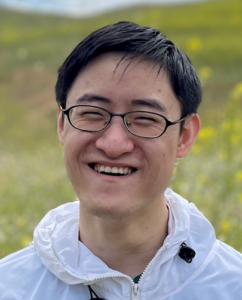
CESG Seminar: Xiongye Xiao

Posted on March 17, 2025 by Vickie Winston

Friday, March 21, 2025
10:20 – 11:10 a.m.  (CST)
ETB 1020           

Xiongye Xiao
PhD Candidate , Dept. of Electrical & Computer Engineering
University of Southern California

Title: “AI for Science: From Microscopic Structures and Dynamics to Macroscopic Functions”

Abstract
The evolution of scientific discovery has transitioned from observational studies and mathematical modeling to data-driven AI methodologies. With the rapid advancement of deep learning and neural network architectures, AI has become a powerful tool for accelerating scientific discovery. However, as large-scale models exhibit emergent behaviors, understanding the structural and dynamic principles that govern these models is crucial.

In this talk, I will discuss Neuron-based Multifractal Analysis (NeuroMFA), a novel framework that bridges AI and scientific discovery by characterizing the self-organization of large models. Inspired by neuroscience, NeuroMFA provides a structural perspective on emergent intelligence in AI, offering insights into how deep neural networks develop complex functionalities. This approach enables a deeper understanding of AI’s role in science and facilitates advancements in areas such as material discovery, physics-informed machine learning, and computational neuroscience.

Biography
Xiongye Xiao is a researcher specializing in AI for Science, neural operators, and network science. He is a Ph.D. candidate in Electrical and Computer Engineering at the University of Southern California. His work focuses on developing advanced mathematical and machine learning frameworks to bridge microscopic structures and dynamics to macroscopic functions, with applications in neuroscience, material science, and AI-driven scientific discovery. He has published in leading venues such as NeurIPS, ICLR, and Science Robotics, and his contributions include pioneering Neuron-based Multifractal Analysis (NeuroMFA) for analyzing emergent intelligence in large models, as well as the Multiwavelet Neural Operator, which enhances PDE learning through multi-resolution representations.

Please join us on Friday, 3/21/25 at 10:20 a.m. in ETB 1020!

Xiongye Xiao’s Webpage: xiongyexiao.com
Google Scholar Page: https://scholar.google.com/citations?user=AvIxA64AAAAJ&hl=en&oi=ao

Host: Dr. Jiang Hu

Filed Under: Seminars

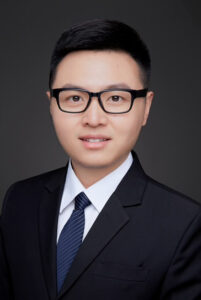
CESG Seminar: Cunxi Yu

Posted on February 17, 2025 by Vickie Winston

Friday, March 7, 2025
10:20 – 11:10 a.m.  (CST)
ETB 1020           

Cunxi Yu
Assistant Professor, Dept. of Electrical & Computer Engineering
University of Maryland, College Park

Title: “The Rise and Fall of Machine Learning for EDA and Beyond – Studies in Synthesis and Verification”

Abstract
In recent years, Machine Learning (ML) has gained considerable momentum in electronic design automation (EDA). Specifically, the successes of ML-driven EDA methods and infrastructure have demonstrated its unique capability in capturing the multitude of factors affecting estimation accuracy, effectively exploring large algorithmic and design spaces in synthesis, and accelerating classical combinatorial optimization problems. In particular, synthesis and verification, critical stages in EDA, have significantly benefited from ML in the last five years. However, during the development of ML-driven synthesis and verification approaches, several points of convergence have been observed, including practicality, system engineering challenges, data availability, and determinism. In this talk, I will present the journey of exploring ML in synthesis and verification, focusing on discussing the evolutionary developments from static ML-based synthesis approaches to algorithmic learning and general combinatorial optimizations using advanced domain-specific ML techniques. The talk will primarily focus on our recent work in high-level synthesis, logic synthesis, and Boolean reasoning.

Biography
Dr. Cunxi Yu is an Assistant Professor at the University of Maryland, College Park. His research interests center around novel algorithms, systems, and hardware designs for computing and security. Before joining the University of Maryland, Cunxi was an Assistant Professor at the University of Utah and held a PostDoc position at Cornell University. His work has received the Best Paper Award at DAC (2023), the NSF CAREER Award (2021), American Physical Society DLS poster award (2022), and multiple best paper nominations. Cunxi earned his Ph.D. from UMass Amherst in 2017.

Please join us on Friday, 3/7/25 at 10:20 a.m. in ETB 1020!

Dr. Yu’s personal webpage and Google Scholar pages are linked from here: https://ece.umd.edu/clark/faculty/1834/Cunxi-Yu

Host: Dr. Jiang Hu

Filed Under: Seminars

  • « Go to Previous Page
  • Go to page 1
  • 2
  • Go to page 3
  • Go to page 4
  • Interim page numbers omitted …
  • Go to page 10
  • Go to Next Page »

© 2016–2025 Department of Electrical and Computer Engineering

Texas A&M Engineering Experiment Station Logo