• Skip to main content
  • Skip to primary sidebar

Department of Electrical and Computer Engineering

The Computer Engineering and Systems Group

Texas A&M University College of Engineering
  • Research
  • News
  • People
    • Faculty
    • Joint Faulty
    • Staff
    • Students
  • Academics
    • Graduate Degrees
      • All Courses
    • Undergraduate
  • Seminars
    • CESG Seminars
    • Fishbowl Seminar Series
    • Computer Engineering Eminent Scholar Seminar Series
    • Topics In Systems Seminar
    • Related Seminars
  • Contact

Seminars

CESG Seminar: Dr. Tommaso Melodia

Posted on February 25, 2022 by Vickie Winston

Friday, March 4, 2022
4:10 – 5:00 p.m.
Zoom: https://tamu.zoom.us/j/96343481647
 
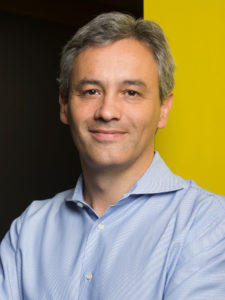
Dr. Tommaso Melodia
William L. Smith Professor, Northeastern University

Talking Points
– Open, Programmable, and Virtualized Wireless Architectures
– O-RAN architecture: Research Challenges
– Deep Reinforcement Learning for sequential decision making in the Open RAN
– Resources available for at scale prototyping, testing, data collection: PAWR, Colosseum

Title
“Toward AI-based Control and Orchestration in the Open RAN: Architectures, Algorithms, Testbeds”

Abstract
This talk will present an overview of our work on laying the basic principles to design open, programmable, AI-driven, and virtualized next-generation wireless networks. We will cover in detail challenges and opportunities associated with the evolution of cellular systems into cloud-native softwarized architectures enabling fine grained AI-based control of end-to-end functionalities on mobile devices, in the radio access network, and at the edge. We will also discuss existing testbeds and platforms available to the community for prototyping, experimentation, and data collection in virtualized and softwarized wireless systems.

Biography
Tommaso Melodia is the William Lincoln Smith Professor with the Department of Electrical and Computer Engineering at Northeastern University in Boston. He is also the Founding Director of the Institute for the Wireless Internet of Things and the Director of Research for the PAWR Project Office. He received his Laurea (integrated BS and MS) from the University of Rome – La Sapienza and his Ph.D. in Electrical and Computer Engineering from the Georgia Institute of Technology in 2007. He is an IEEE Fellow and recipient of the National Science Foundation CAREER award. Prof. Melodia is serving as Editor in Chief for Computer Networks, and has served as Associate Editor for IEEE Transactions on Wireless Communications, IEEE Transactions on Mobile Computing, IEEE Transactions on Multimedia, among others. He was the Technical Program Committee Chair for IEEE Infocom 2018, and General Chair for ACM MobiHoc 2020, IEEE SECON 2019, ACM Nanocom 2019, and ACM WUWNet 2014. Prof. Melodia’s research on modeling, optimization, and experimental evaluation of wireless networked systems has been funded by US federal agencies and industry.

Dr. Melodia: https://ece.northeastern.edu/wineslab/tmelodia.php

On Zoom @ 4:10 p.m. on Friday, 3/4/22

Join Zoom Meeting
https://tamu.zoom.us/j/96343481647
Meeting ID: 963 4348 1647
Filed Under: Seminars

CESG Seminar: Dr. Adam Wierman

Posted on February 21, 2022 by Vickie Winston

Friday, February 25, 2022
4:10 – 5:00 p.m.
Zoom: https://tamu.zoom.us/j/96343481647
 
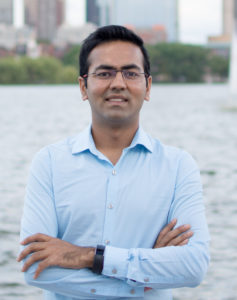
Dr. Adam Wierman
Professor of Computing and Mathematical Sciences and Director of Information Sciences and Technology, Caltech

Title
“Online Optimization and Control using Black-Box Predictions”

Abstract
Making use of modern black-box AI tools is potentially transformational for online optimization and control. However, such machine-learned algorithms typically do not have formal guarantees on their worst-case performance, stability, or safety. So, while their performance may improve upon traditional approaches in “typical” cases, they may perform arbitrarily worse in scenarios where the training examples are not representative due to, e.g., distribution shift or unrepresentative training data. This represents a significant drawback when considering the use of AI tools for energy systems and autonomous cities, which are safety-critical. A challenging open question is thus: Is it possible to provide guarantees that allow black-box AI tools to be used in safety-critical applications? In this talk, I will introduce recent work that aims to develop algorithms that make use of black-box AI tools to provide good performance in the typical case while integrating the “untrusted advice” from these algorithms into traditional algorithms to ensure formal worst-case guarantees. Specifically, we will discuss the use of black-box untrusted advice in the context of online convex body chasing, online non-convex optimization, and linear quadratic control, identifying both novel algorithms and fundamental limits in each case.

Biography
Adam Wierman is a Professor in the Department of Computing and Mathematical Sciences at Caltech. He received his Ph.D., M.Sc., and B.Sc. in Computer Science from Carnegie Mellon University and has been a faculty at Caltech since 2007. Adam’s research strives to make the networked systems that govern our world sustainable and resilient. He is best known for his work spearheading the design of algorithms for sustainable data centers and his co-authored book on “The Fundamentals of Heavy-tails”. He is a recipient of multiple awards, including the ACM Sigmetrics Rising Star award, the ACM Sigmetrics Test of Time award, the IEEE Communications Society William R. Bennett Prize, multiple teaching awards, and is a co-author of papers that have received “best paper” awards at a wide variety of conferences across computer science, power engineering, and operations research.

For more on Dr. Wierman see https://adamwierman.com.

On Zoom @ 4:10 p.m. on Friday, 2/25/22

Join Zoom Meeting
https://tamu.zoom.us/j/96343481647
Meeting ID: 963 4348 1647
Filed Under: Seminars

CESG Seminar: Dr. Dinesh Bharadia

Posted on February 8, 2022 by Vickie Winston

Friday, February 11, 2022
4:10 – 5:00 p.m.
Zoom: https://tamu.zoom.us/j/96343481647
 
Dr. Dinesh Bharadia
Asst. Professor, Center for Wireless Communications, University of California San Diego

Title
“Wireless sensing meets autonomous systems: Deployable Low-Overhead RF Localization and Mapping”

Abstract
The ability to track and locate devices and robots has become increasingly important for new and existing applications such as tracking Virtual Reality headsets, Robotics, or just your smartphone. For such purposes, in the last two decades, RF localization has gained traction, however, without any real-world deployment. Primarily due to lack of low-overhead deployment and being accurate and robust. I will present new designs for localization systems that leverage novel hardware and software capabilities to push us closer to this vision.

Specifically, I will present an autonomous robot system as a platform to enable us closer to this vision:

  1. I will discuss enabling context-assisted accurate indoor localization, which leverages the autonomous robot to collect large-scale data sets and mapping. We develop techniques to enable accurate indoor localization within the context of a given map overcoming the shortcomings of the corner cases and providing reliable and robust location estimates.
  2. I will discuss the mapping requirements for these indoor environments that provide context for the predicted location. I will present a system that accurately maps the WiFi anchors in the given physical map to a few millimeters.
  3. Finally, I will briefly present how robotics can use WiFi as a sensor like LiDar for SLAM algorithms.

Furthermore, my group has enabled low-power and low-latency localization systems for indoor scenarios ranging from home, office to warehouse to meet next-generation Industrial IoT applications, localizing Bluetooth and UWB devices. All of this work can be found under wcsng.ucsd.edu/localization.html

Biography
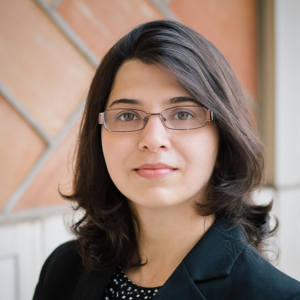
Dinesh Bharadia has been faculty in ECE at the University of California San Diego since January 2018. He received his Ph.D. from Stanford University in 2016 and was a Postdoctoral Associate at MIT. Specifically, in his dissertation, he built a prototype of a radio that invalidated a long-held assumption in wireless is that radios cannot transmit and receive at the same time on the same frequency. From 2013 to 2015, he was a Principal Scientist for Kumu Networks. He commercialized his research on full-duplex radios, building a product that underwent successful field trials at Tier 1 network providers worldwide like Deutsche Telekom and SK Telecom. This product is currently under deployment. He is the principal advisor for multiple startups developed atop his research. His research interests include advancing the theory and design of modern wireless communication systems, wireless imaging, sensor networks, and wireless sensing, and broadly sensing and networking. Recently, he has been actively involved in designing cooperative autonomous systems, specifically in autonomous perception.

In recognition of his work, Dinesh was named to Forbes 30 under 30 for the science category worldwide list. Dinesh was also named a Marconi Young Scholar for outstanding wireless research and awarded the Michael Dukakis Leadership award. He was also named as one of the top 35 Innovators under 35 in the world by MIT Technology Review in 2016. Dinesh is also the recipient of the Sarah and Thomas Kailath Stanford Graduate Fellowship.

Dr. Bharadia Google Scholar Page: https://scholar.google.com/citations?user=5SjaXJsAAAAJ

On Zoom @ 4:10 p.m. on Friday, 2/18/22

Join Zoom Meeting
https://tamu.zoom.us/j/96343481647
Meeting ID: 963 4348 1647
Filed Under: Seminars

CESG Seminar: Dr. Gauri Joshi

Posted on February 7, 2022 by Vickie Winston

Friday, February 18, 2022
4:10 – 5:00 p.m.
Zoom Recording
 
Dr. Gauri Joshi
Asst. Professor, Dept. of Electrical & Computer Engineering, Carnegie Mellon University

Title
“Tackling Computational Heterogeneity in Federated Learning”

Talking Points

  • Data Heterogeneity in Federated Learning
  • Variable Computation Speeds of Clients Participating in Federated Learning
  • Client Selection in Federated Learning

Abstract
The future of machine learning lies in moving both data collection as well as model training to the edge. The emerging area of federated learning seeks to achieve this goal by orchestrating distributed model training using a large number of resource-constrained mobile devices that collect data from their environment. Due to limited communication capabilities as well as privacy concerns, the data collected by these devices cannot be sent to the cloud for centralized processing. Instead, the nodes perform local training updates and only send the resulting model to the cloud. A key aspect that sets federated learning apart from data-center-based distributed training is the inherent heterogeneity in data and local computation at the edge clients. In this talk, I will present our recent work on tackling computational heterogeneity in federated optimization, firstly in terms of heterogeneous local updates made by the edge clients, and secondly in terms of intermittent client availability.

Biography
Gauri Joshi is an assistant professor in the ECE department at Carnegie Mellon University since September 2017. Previously, she worked as a Research Staff Member at IBM T. J. Watson Research Center. Gauri completed her Ph.D. from MIT EECS in June 2016, advised by Prof. Gregory Wornell. She received her B.Tech and M.Tech in Electrical Engineering from the Indian Institute of Technology (IIT) Bombay in 2010. Her awards and honors include the NSF CAREER Award (2021), ACM Sigmetrics Best Paper Award (2020), NSF CRII Award (2018), IBM Faculty Research Award (2017), Best Thesis Prize in Computer science at MIT (2012), and Institute Gold Medal of IIT Bombay (2010).

Dr. Joshi’s Website: https://www.andrew.cmu.edu/user/gaurij/

On Zoom @ 4:10 p.m. on Friday, 2/18/22

Join Zoom Meeting
https://tamu.zoom.us/j/96343481647
Meeting ID: 963 4348 1647

Filed Under: Seminars

CESG Seminar: Dr. Lisa Pérez

Posted on February 1, 2022 by Vickie Winston

Friday, February 4, 2022
4:10 – 5:00 p.m.
Zoom: https://tamu.zoom.us/j/96343481647
 
Dr. Lisa Pérez
Associate Director, Texas A&M’s High Performance Research Computing

Title: “AI/ML Frameworks and Advanced Computing Resources to Accelerate Research at Texas A&M’s High Performance Research Computing (HPRC) Facility”

Talking Points

  • AI/ML Frameworks
  • High Performance Computing
  • AI and Emerging Technology

Abstract
Artificial Intelligence and Machine Learning (AI/ML) frameworks have become an essential tool in almost every discipline of research.  Researchers often begin learning these tools on their personal laptop and run into barriers with complicated installation procedures and limited computing resources.  This talk will focus on the AI/ML frameworks, software development and advanced computing hardware offered to researchers through Texas A&M’s High Performance Research Computing (HPRC).  An overview of interactive computing utilizing HPRC’s portal and Jupyter notebooks to run common AI/ML tools such as Pandas, Matplotlib, Scikit learn, and Keras will be provided.  Lastly, an introduction to HPRC’s advanced hardware and infrastructure including upcoming emerging technologies of composability, High Bandwidth Memory (HBM) processors, Intel Ponte Vecchio GPUs (Graphics Processing Units), Intel FPGAs (Field Programmable Gate Arrays), NEC Vector Engines, NextSilicon co-processors, and Graphcore IPUs (Intelligence Processing Units) will be presented.

Biography
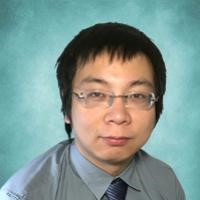
Lisa M. Pérez is the Associate Director for Advanced Computing Enablement at Texas A&M’s High Performance Research Computing (HPRC) facility.  She has an extensive background in quantum chemistry, molecular modeling, multidisciplinary research and High Performance Computing (HPC) system administration.  She participates in many federally funded research projects and is dedicated to providing cutting-edge resources and training to develop the next generation workforce in the computational sciences.  She received her Ph.D. in Chemistry from Texas A&M University and a B.S. in Chemistry with minors in Math and Computer Information Systems (CIS) from Humboldt State University.

On Zoom @ 4:10 p.m. on Friday, 2/4/22

Join Zoom Meeting
https://tamu.zoom.us/j/96343481647
Meeting ID: 963 4348 1647
Filed Under: Seminars

CESG Seminar: Dr. Bo Yuan

Posted on January 25, 2022 by Vickie Winston

Friday, January 25, 2021
4:10 – 5:00 p.m.
via Zoom (link below)
 
Dr. Bo Yuan
Asst. Professor, Dept. of Electrical & Computer Engineering, Rutgers University

Title: “Algorithm and Hardware Co-Design for Efficient Deep Learning: Sparse and Low-rank Perspective”

Talking Points

  • Algorithm and hardware co-design for structured and unstructured deep neural networks
  • Algorithm and hardware co-design for high-order tensor decomposition-based deep neural networks

Abstract
In the emerging artificial intelligence era, deep neural networks (DNNs), a.k.a. deep learning, have gained unprecedented success in various applications. However, DNNs are usually storage intensive, computation intensive and very energy consuming, thereby posing severe challenges on the future wide deployment in many application scenarios, especially for the resource-constraint low-power IoT application and embedded systems. In this talk, I will introduce the algorithm/hardware co-design works for energy-efficient DNN in my group, from both the sparse and low-rank perspectives. First, I will show the benefit of using structured and unstructured sparsity of DNN for designing low-latency and low-power DNN hardware accelerators. In the second part of my talk, I will present an algorithm/hardware co-design framework that leverages low tensor rankness towards energy-efficient high-accuracy DNN model and accelerators.

Biography
Dr. Bo Yuan is currently the assistant professor in the Department of Electrical and Computer Engineering in Rutgers University. Before that, he was with City University of New York from 2015-2018. Dr. Bo Yuan received his bachelor and master degrees from Nanjing University, China in 2007 and 2010, respectively. He received his PhD degree from University of Minnesota, Twin Cities in 2015. His research interests include algorithm and hardware co-design and implementation for machine learning and signal processing systems, error-resilient low-cost computing techniques for embedded and IoT systems and machine learning for domain-specific applications. He is the recipient of Global Research Competition Finalist Award in Broadcom Corporation. Dr. Yuan serves as technical committee track chair and technical committee member for several IEEE/ACM conferences. He is the associated editor of Springer Journal of Signal Processing System

Zoom Link: https://tamu.zoom.us/j/96343481647; Zoom ID: 963 4348 1647

Filed Under: Seminars

CESG Seminar: Dr. Craig Robinson

Posted on January 25, 2022 by Vickie Winston

Friday, January 21, 2021
4:10 – 5:00 p.m.
 ETB 1020 – **In-person**
 
Dr. Craig Robinson
Tech Lead and Manager for Positioning at Waymo

Title: “Waymo Self Driving: An Overview”

Talking Points

    • Self-driving is driven by corner cases
    • Sensor fusion is important; but independence is more useful
    • No problem is too simple

Abstract
We will first give an overview of Waymo, the “Waymo Driver” and the vision for Self-Driving systems we have under development. We will then take a closer look at the current generation vehicle from a technical standpoint and delve into the sensor systems and modalities onboard (radar, laser, camera, IMU’s and microphones(!)). That will lead to a discussion of higher level system architecture (hardware and software) and the safety framework that underpins the system. Finally we will wrap up with some observations from the field regarding differences between research, development and deployment of complex systems like self-driving vehicles.

Biography
Dr. Robinson is a Tech Lead and manager for Positioning at Waymo and is broadly responsible for delivering positioning architecture, software and hardware systems. He joined the self-driving company in 2014 with expertise in inertial navigation, sensor fusion, safety and system design. Prior to Waymo, Dr Robinson worked on pose estimation for Google Street View, server fleet intelligence in Google’s data centers, and early DSRC safety systems at Mercedes-Benz R&D. Dr Robinson completed his MSc & Phd  At University of Illinois in the area of Networked Control systems and was a Fulbright Scholar in 2001. He holds 10 patents in the area of Self Driving, a swimming Guinness world record and a hobby of flying human powered planes.

Filed Under: Seminars

CESG Seminar: Dr. Mayank Parasar

Posted on January 14, 2022 by Vickie Winston

Friday, March 25, 2022
4:10 – 5:00 p.m.
ETB 1020 – *In-person* (Emerging Technologies Building)
Dr. Mayank Parasar
Samsung Austin R&D Center (SARC) in Austin, TX

Title: 
“Subactive Techniques for Guaranteeing Routing and Protocol Deadlock Freedom in Interconnection”

Talking Points:

    • Correctness is of paramount concern in interconnection networks. (Routing and Protocol) Deadlock freedom is a cornerstone of correctness.
    • Prior solutions either over-provision the network or incur performance penalty to provide deadlock freedom
    • We propose new set of unified techniques to resolve routing and protocol deadlocks

Abstract
Interconnection networks are the communication backbone for any system. They occur at various scales: from on-chip networks, for example 2.5D/chiplet networks, between processing cores, to supercomputers between compute nodes, to data centers between high-end servers. One of the most fundamental challenges in an interconnection network is that of deadlocks. Deadlocks can be of two types: routing level deadlocks and protocol level deadlocks. Routing level deadlocks occur because of cyclic dependency between packets trying to acquire buffers, whereas protocol level deadlock occurs because the response message is stuck indefinitely behind the queue of request messages. Both kinds of deadlock render the forward movement of packets impossible leading to complete system failure.

Prior work either restricts the path that packets take in the network or provisions an extra set of buffers to resolve routing level deadlocks. For protocol level deadlocks, separate sets of buffers are reserved at every router for each message class. Naturally, proposed solutions either restrict the packet movement resulting in lower performance or require higher area and power.

We propose a new set of efficient techniques for providing both routing and protocol level deadlock freedom. Our techniques provide periodic forced movement to the packets in the network, which breaks any cyclic dependency of packets. Breaking this cyclic dependency results in resolving routing level deadlocks. Moreover, because of periodic forced movement, the response message is never stuck indefinitely behind the queue of request messages; therefore, our techniques also resolve protocol level deadlocks. We use the term ‘subactive’ for these new class of techniques.

Biography
:
Dr. Mayank parasar works at Samsung Austin R&D Center (SARC) in Austin, TX. Mayank Parasar has received his Ph.D. from the School of Electrical and Computer Engineering at Georgia Institute of Technology. He received an M.S. in Electrical and Computer Engineering from Georgia Tech in 2017 and a B.Tech. in Electrical Engineering department from Indian Institute of Technology (IIT) Kharagpur in 2013.

He works in computer architecture with the research focus on proposing breakthrough solutions in the field of interconnection networks, memory system and system software/application layer co-design. His dissertation, titled Subactive Techniques for Guaranteeing Routing and Protocol Deadlock Freedom in Interconnection Networks, formulates techniques that guarantee deadlock freedom with a significant reduction in both area and power budget.

He held the position of AMD Student Ambassador at Georgia Tech in the year 2018-19. He received the Otto & Jenny Krauss Fellow award in the year 2015-16.

In-Person @ ETB 1020 @ 4:10 p.m. on Friday, 3/11/22

Filed Under: Seminars

  • « Go to Previous Page
  • Go to page 1
  • Interim pages omitted …
  • Go to page 9
  • Go to page 10
  • 11

© 2016–2026 Department of Electrical and Computer Engineering

Texas A&M Engineering Experiment Station Logo